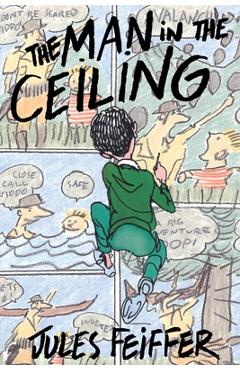
The Man in the Ceiling - Jules Feiffer
Cod EAN 9780062059079
Preț
77,32 lei
85,91 lei
−10%
Fără reducere reală
Cel mai mic preț din cele 9 zile dinainte de 22 octombrie 2026 a fost 68,73 lei, mai mic decât acum. Reducerea de −10% e calculată față de prețul vechi afișat de magazin (85,91 lei).
Peste prețul mediu din ultimele 28 de zile
Media: 76,71 lei. Cel mai mic preț a fost 68,73 lei, ultima dată pe 21 octombrie 2026; acum e cu 12% mai mult. Vezi istoricul
la Libris
- Transport gratuit peste 135 lei
- Cupon de 10% la abonarea la newsletter
- Retur extins la 30 de zile
În stoc la Libris Prețuri actualizate la 22 octombrie 2026, 16:11
Oferta disponibilă
Prețurile și disponibilitatea sunt preluate automat de la magazine și se pot schimba. Când cumperi printr-un link de pe site, putem primi un comision de la magazin, fără niciun cost în plus pentru tine. Cum funcționează
-
 The Man in the Ceiling - Jules Feiffer
În stoc
77,32 lei
Cel mai mic preț înainte
85,91 lei
Istoricul prețului
| Perioada | Cel mai mic | Cel mai mare | Prețul mediu | Scăderi |
|---|---|---|---|---|
| De când îl urmărim (28 de zile) | 68,73 lei | 77,32 lei | 76,71 lei | 1 |
Vezi schimbările de preț
| Din data | Cel mai mic preț |
|---|---|
| 22 octombrie 2026 | 77,32 lei |
| 20 octombrie 2026 | 68,73 lei |
| 13 octombrie 2026 | 77,32 lei |
Descriere
Feiffer, Jules: - Jules Feiffer has won a number of prizes for his cartoons, plays, and screenplays, including the Pulitzer Prize for editorial cartooning. His books for children include The Man in the Ceiling; A Barrel of Laughs, A Vale of Tears; I Lost My Bear; Bark, George; and Meanwhile... He lives in Richfield Springs, New York. In His Own Words... I have been writing and drawing comic strips all my life, first as a six-year-old, when I'd try to draw like my heroes: Alex Raymond, who did Flash Gordon, E. C. Segar, who did Popeye, Milton Caniff, who did Terry and the Pirates. The newspaper strip back in the 1940s was a glorious thing to behold. Sunday pages were full-sized and colored broadsheets that created a universe that could swallow a boy whole. I was desperate to be a cartoonist. One of my heroes was Will Eisner, who did a weekly comic book supplement to the Sunday comics. One day I walked into his office and showed him my samples. He said they were lousy, but he hired me anyway. And I began my apprenticeship. Later I was drafted out of Eisner's office into the Korean War. Militarism, regimentation, and mindless authority combined to squeeze the boy cartoonist out of me and bring out the rebel. There was no format at the time to fit the work I raged and screamed to do, so I had to invent one. Cartoon satire that commented on the military, the bomb, the cold war, the hypocrisy of grown-ups, the mating habits of urban young men and women: These were my subjects. After four years of trying to break into print and getting nowhere, the Village Voice, the first alternative newspaper, offered to publish me. Only one catch: They couldn't pay me. What did I care? My weekly satirical strip, Sick Sick Sick, later renamed Feiffer, started appearing in late 1956. Two years later, Sick Sick Sick came out in book form and became a bestseller. The following years saw a string of cartoon collections, syndication, stage and screen adaptations of the cartoon. One, Munro, won an Academy Award. This was heady stuff, taking me miles beyond my boyhood dreams. The only thing that got in the way of my enjoying it was the real world: the Cuban missile crisis, the assassination of President Kennedy, the Vietnam War, the civil rights revolution. The country was coming unglued, and my weekly cartoons didn't seem to be an adequate way of handling it. So I started writing plays: Little Murders, The White House Murder Case, Carnal Knowledge, Grown Ups. All the themes of my comic strips expanded theatrically and, later, cinematically to give me the time and space I needed to explain the times to myself and to my audience. I grew older. I had a family and, late in life, a very young family. I started thinking, as old guys will, about what I wanted these children to read, to learn. I read them E. B. White and Beverly Cleary and Roald Dahl, and, one day, I thought, Hey, I can do this. Writing for young readers connects me professionally to a part of myself that I didn't know how to let out until I was sixty: that kid who lived a life of innocence, mixed with confusion and consternation, disappointment and dopey humor. And who drew comic strips and needed friends--and found them--in cartoons and children's books that told him what the grown-ups in his life had left out. That's what reading did for me when I was a kid. Now I try to return the favor.
Descrierea este preluată de la magazin.