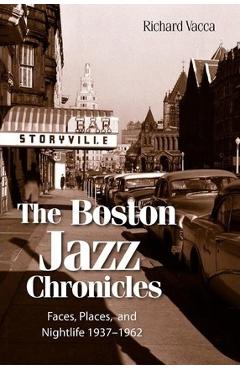
The Boston Jazz Chronicles - Richard Vacca
Cod EAN 9780983991007
Preț
111,32 lei
123,69 lei
−10%
Fără reducere reală
Cel mai mic preț din cele 9 zile dinainte de 22 octombrie 2026 a fost 98,95 lei, mai mic decât acum. Reducerea de −10% e calculată față de prețul vechi afișat de magazin (123,69 lei).
Peste prețul mediu din ultimele 30 de zile
Media: 110 lei. Cel mai mic preț a fost 98,95 lei, ultima dată pe 21 octombrie 2026; acum e cu 13% mai mult. Vezi istoricul
la Libris
- Transport gratuit peste 135 lei
- Cupon de 10% la abonarea la newsletter
- Retur extins la 30 de zile
În stoc la Libris Prețuri actualizate la 22 octombrie 2026, 16:17
Oferta disponibilă
Prețurile și disponibilitatea sunt preluate automat de la magazine și se pot schimba. Când cumperi printr-un link de pe site, putem primi un comision de la magazin, fără niciun cost în plus pentru tine. Cum funcționează
-
 The Boston Jazz Chronicles - Richard Vacca
În stoc
111,32 lei
Cel mai mic preț înainte
123,69 lei
Istoricul prețului
| Perioada | Cel mai mic | Cel mai mare | Prețul mediu | Scăderi |
|---|---|---|---|---|
| Ultimele 30 de zile | 98,95 lei | 111,32 lei | 110 lei | 1 |
Vezi schimbările de preț
| Din data | Cel mai mic preț |
|---|---|
| 22 octombrie 2026 | 111,32 lei |
| 20 octombrie 2026 | 98,95 lei |
| 13 octombrie 2026 | 111,32 lei |
Descriere
\n There has always been more to music in Boston than the Boston Symphony Orchestra. Jazz, for example, dates to the early 1900s, but it was in the 1940s and 1950s that it truly sparkled. The Boston Jazz Chronicles: Faces, Places, and Nightlife 1937-1962 is the first book to document that city's active jazz scene at mid-century. Boston jazz came into its own during the World War II years, when the big bands supplied America with its popular music, and Boston's Charlie and Cy Shribman were among the kingmakers of the big-band era. The city produced such talents as pianist and bandleader Sabby Lewis, the multi-instrumentalist Ray Perry, and bassist Lloyd Trotman. The scene benefited from the extended wartime presence of established stars, including trumpeter Frankie Newton and trombonist Vic Dickenson, and from the start of a Sunday afternoon jam session tradition that brought the nation's best jazzmen into regular contact with local players. There were opportunities for musicians, particularly young musicians, to gain valuable experience by filling in for the older men serving in the military. The end of the war introduced new jazz sounds to Boston, and reintroduced a few older ones as well. Alongside those musicians like Lewis still playing swing, there were others looking to the past for inspiration, sparking a Dixieland revival, and still others looking forward, spreading the new sound of bebop. There were big-band survivors in downsized groups playing jump blues, and others organizing new big bands along modern lines. The end of the war also brought a surge of talented musicians, many of them veterans and beneficiaries of the GI Bill. They were attracted by the city's music conservatories and the new Schillinger House, soon to be renamed the Berklee School of Music. Boston became a destination for musicians seeking new musical direction. Here they joined with Boston's own contingent of formidable musicians to form a new, more modern scene, led by such luminaries as Jaki Byard, Joe Gordon, Nat Pierce, Charlie Mariano, Herb Pomeroy, Sam Rivers, Alan Dawson, and Dick Twardzik. They would carry Boston jazz to a creative peak in the mid-to-late 1950s that still remains unequaled. The music was splendid, but there was more. Boston was home to influential jazz journalists George Frazier and Nat Hentoff; Berklee College of Music founder Lawrence Berk; Father Norman O'Connor, the Jazz Priest; record company executive and prod \nThere has always been more to m
Descrierea este preluată de la magazin.