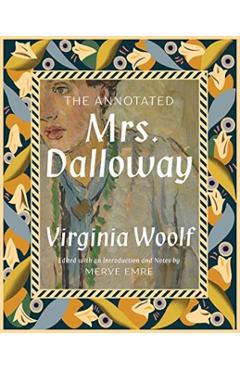
The Annotated Mrs. Dalloway - Merve Emre
Cod EAN 9781631496769
Preț
210,60 lei
234 lei
−10%
Fără reducere reală
Cel mai mic preț din cele 20 de zile dinainte de 2 noiembrie 2026 a fost 188,16 lei, mai mic decât acum. Reducerea de −10% e calculată față de prețul vechi afișat de magazin (234 lei).
Sub prețul mediu din ultimele 27 de zile
Media: 215 lei. Cel mai mic preț a fost 188,16 lei, ultima dată pe 21 octombrie 2026; acum e cu 12% mai mult. Vezi istoricul
la Libris
- Transport gratuit peste 135 lei
- Cupon de 10% la abonarea la newsletter
- Retur extins la 30 de zile
În stoc la Libris Prețuri actualizate la 2 noiembrie 2026, 21:00
Oferta disponibilă
Prețurile și disponibilitatea sunt preluate automat de la magazine și se pot schimba. Când cumperi printr-un link de pe site, putem primi un comision de la magazin, fără niciun cost în plus pentru tine. Cum funcționează
-
 The Annotated Mrs. Dalloway - Merve Emre
În stoc
210,60 lei
Cel mai mic preț înainte
234 lei
Istoricul prețului
| Perioada | Cel mai mic | Cel mai mare | Prețul mediu | Scăderi |
|---|---|---|---|---|
| De când îl urmărim (27 de zile) | 188,16 lei | 226,80 lei | 215 lei | 2 |
Vezi schimbările de preț
| Din data | Cel mai mic preț |
|---|---|
| 2 noiembrie 2026 | 210,60 lei |
| 23 octombrie 2026 | 226,80 lei |
| 22 octombrie 2026 | 211,68 lei |
| 20 octombrie 2026 | 188,16 lei |
| 13 octombrie 2026 | 211,68 lei |
Descriere
\nMrs. Dalloway said she would buy the flowers herself. So begins Virginia Woolf's much-beloved fourth novel. First published in 1925, Mrs. Dalloway has long been viewed not only as Woolf's masterpiece, but as a pivotal work of literary modernism and one of the most significant and influential novels of the twentieth century. In this visually powerful annotated edition, acclaimed Oxford don and literary critic Merve Emre gives us an authoritative version of this landmark novel, supporting it with generous commentary that reveals Woolf's aesthetic and political ambitions--in Mrs. Dalloway and beyond--as never before. Mrs. Dalloway famously takes place over the course of a single day in late June, its plot centering on the upper-class Londoner Clarissa Dalloway, who is preparing to throw a party that evening for the nation's elite. But the novel is complicated by Woolf's satire of the English social system, and by her groundbreaking representation of consciousness. The events of the novel flow through the minds and thoughts of Clarissa and her former lover Peter Walsh and others in their circle, but also through shopkeepers and servants, among others. Together Woolf's characters--each a jumble of memories and perceptions--create a broad portrait of a city and society transformed by the Great War in ways subtle but profound ways. No figure has been more directly shaped by the conflict than the disturbed veteran Septimus Smith, who is plagued by hallucinations of a friend who died in battle, and who becomes the unexpected second hinge of the novel, alongside Clarissa, even though--in one of Woolf's many radical decisions--the two never meet.Emre's extensive introduction and annotations follow the evolution of Clarissa Dalloway--based on an apparently conventional but actually quite complex acquaintance of Woolf's--and Septimus Smith from earlier short stories and drafts of Mrs. Dalloway to their emergence into the distinctive forms devoted readers of the novel know so well. For Clarissa, Septimus, and her other creations, Woolf relied on the skill of character reading, her technique for bridging the gap between life and fiction, reality and representation. As Emre writes, Woolf's approach to representing character involved burrowing deep into the processes of consciousness, and, so submerged, illuminating the infinite variety of sensation and perception concealed therein. From these depths, she extracted an unlimited capacity for life. It is in Woolf's
Descrierea este preluată de la magazin.