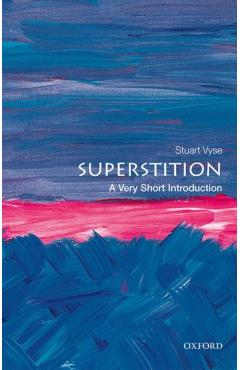
Superstition: A Very Short Introduction - Stuart Vyse
Cod EAN 9780198819257
Preț
72,49 lei
80,54 lei
−10%
Fără reducere reală
Cel mai mic preț din cele 9 zile dinainte de 22 octombrie 2026 a fost 64,43 lei, mai mic decât acum. Reducerea de −10% e calculată față de prețul vechi afișat de magazin (80,54 lei).
Peste prețul mediu din ultimele 29 de zile
Media: 71,93 lei. Cel mai mic preț a fost 64,43 lei, ultima dată pe 21 octombrie 2026; acum e cu 13% mai mult. Vezi istoricul
la Libris
- Transport gratuit peste 135 lei
- Cupon de 10% la abonarea la newsletter
- Retur extins la 30 de zile
În stoc la Libris Prețuri actualizate la 22 octombrie 2026, 16:15
Oferta disponibilă
Prețurile și disponibilitatea sunt preluate automat de la magazine și se pot schimba. Când cumperi printr-un link de pe site, putem primi un comision de la magazin, fără niciun cost în plus pentru tine. Cum funcționează
-
 Superstition: A Very Short Introduction - Stuart Vyse
În stoc
72,49 lei
Cel mai mic preț înainte
80,54 lei
Istoricul prețului
| Perioada | Cel mai mic | Cel mai mare | Prețul mediu | Scăderi |
|---|---|---|---|---|
| De când îl urmărim (29 de zile) | 64,43 lei | 72,49 lei | 71,93 lei | 1 |
Vezi schimbările de preț
| Din data | Cel mai mic preț |
|---|---|
| 22 octombrie 2026 | 72,49 lei |
| 20 octombrie 2026 | 64,43 lei |
| 13 octombrie 2026 | 72,49 lei |
Descriere
\nDo you touch wood for luck, or avoid hotel rooms on floor thirteen? Would you cross the path of a black cat, or step under a ladder? Is breaking a mirror just an expensive waste of glass, or something rather more sinister? Despite the dominance of science in today's world, superstitious beliefs - both traditional and new - remain surprisingly popular. A recent survey of adults in the United States found that 33 percent believed that finding a penny was good luck, and 23 percent believed that the number seven was lucky. Where did these superstitions come from, and why do they persist today? \nThis Very Short Introduction explores the nature and surprising history of superstition from antiquity to the present. For two millennia, superstition was a label derisively applied to foreign religions and unacceptable religious practices, and its primary purpose was used to separate groups and assert religious and social authority. After the Enlightenment, the superstition label was still used to define groups, but the new dividing line was between reason and unreason. Today, despite our apparent sophistication and technological advances, superstitious belief and behaviour remain widespread, and highly educated people are not immune. Stuart Vyse takes an exciting look at the varieties of popular superstitious beliefs today and the psychological reasons behind their continued existence, as well as the likely future course of superstition in our increasingly connected world. \n \nABOUT THE SERIES: The Very Short Introductions series from Oxford University Press contains hundreds of titles in almost every subject area. These pocket-sized books are the perfect way to get ahead in a new subject quickly. Our expert authors combine facts, analysis, perspective, new ideas, and enthusiasm to make interesting and challenging topics highly readable. \n\n
Descrierea este preluată de la magazin.