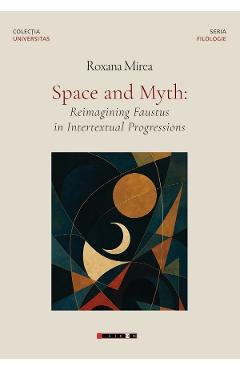
Space and Myth: Reimagining Faustus in Intertextual Progressions - Roxana Mirea
Cod EAN 9786064914347
Preț
55 lei
Același preț în ultimele 29 de zile
Prețul nu s-a schimbat de când îl urmărim. Vezi istoricul
la Libris
- Transport gratuit peste 135 lei
- Cupon de 10% la abonarea la newsletter
- Retur extins la 30 de zile
În stoc la Libris Prețuri actualizate la 10 noiembrie 2026, 00:25
Oferta disponibilă
Prețurile și disponibilitatea sunt preluate automat de la magazine și se pot schimba. Când cumperi printr-un link de pe site, putem primi un comision de la magazin, fără niciun cost în plus pentru tine. Cum funcționează
-
 Space and Myth: Reimagining Faustus in Intertextual Progressions - Roxana Mirea
În stoc
55 lei
Cel mai mic preț
Istoricul prețului
Prețul minim a rămas 55 lei în ultimele 29 de zile.
Descriere
This book explores the evolution of the Faustus myth in English and American drama and fiction, examining how the archetypal figure of Faustus has been reimagined across different historical, cultural, and political contexts. Drawing on a wide range of texts, including Christopher Marlowe’s The Tragical History of Doctor Faustus (1592), Dorothy L. Sayers' The Devil to Pay (1939), and David Mamet's Faustus (2004), among others, the book traces how various authors have adapted the Faustian bargain to reflect contemporary concerns. Through the lens of geocriticism and spatial literary studies, this analysis focuses on the symbolic and metaphoric spaces where the myth unfolds, showing how Faustus’ quest for knowledge is often portrayed as an intellectual or existential journey rather than a simple moral fall. While Marlowe’s Faustus is a tragic figure driven by ego, modern and postmodern adaptations emphasize themes of absurdity, blind arrogance, and dehumanization, reflecting the anxieties of their times. The study highlights how these adaptations satirize the individualism, materialism, and technicism of modern society, offering a critical look at the ethical implications of human self-aggrandizement. The book uncovers a consistent narrative structure in these rewritings - the Faustian bargain, the misuse of knowledge, and the eventual fall into a symbolic Hell - and explores how this framework resonates across various interpretations, whether in drama or novelistic form. By analyzing the intertextual links between these works, the book provides a comprehensive portrait of the Faustus myth’s transformation, showing its adaptability and relevance in questioning the values of Western modernity and postmodernity. Through these complex narratives, the Faustus myth emerges as a powerful metaphor for the dark side of intellectual ambition and the limits of human potential in the face of societal decay.
Descrierea este preluată de la magazin.