-
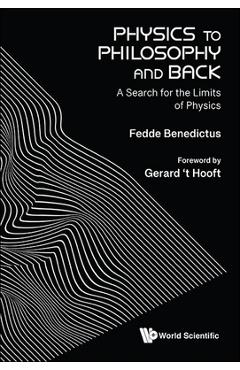
Physics to Philosophy and Back -
Cod EAN 9789811292835
Preț
318,06 lei
353,40 lei
−10%
Fără reducere reală
Cel mai mic preț din cele 9 zile dinainte de 22 octombrie 2026 a fost 282,72 lei, mai mic decât acum. Reducerea de −10% e calculată față de prețul vechi afișat de magazin (353,40 lei).
Peste prețul mediu din ultimele 25 de zile
Media: 315 lei. Cel mai mic preț a fost 282,72 lei, ultima dată pe 21 octombrie 2026; acum e cu 12% mai mult. Vezi istoricul
la Libris
- Transport gratuit peste 135 lei
- Cupon de 10% la abonarea la newsletter
- Retur extins la 30 de zile
În stoc la Libris Prețuri actualizate la 22 octombrie 2026, 16:17
Oferta disponibilă
Prețurile și disponibilitatea sunt preluate automat de la magazine și se pot schimba. Când cumperi printr-un link de pe site, putem primi un comision de la magazin, fără niciun cost în plus pentru tine. Cum funcționează
-
 Physics to Philosophy and Back -
În stoc
318,06 lei
Cel mai mic preț înainte
353,40 lei
Istoricul prețului
| Perioada | Cel mai mic | Cel mai mare | Prețul mediu | Scăderi |
|---|---|---|---|---|
| De când îl urmărim (25 de zile) | 282,72 lei | 318,06 lei | 315 lei | 1 |
Vezi schimbările de preț
| Din data | Cel mai mic preț |
|---|---|
| 22 octombrie 2026 | 318,06 lei |
| 20 octombrie 2026 | 282,72 lei |
| 13 octombrie 2026 | 318,06 lei |
Descriere
What do we really know about the world? Physics utilizes complex equations to avoid having to answer philosophical questions like this. Consider, for example, the fact that the motion of particles is described in terms of straight lines, while any line that we can actually draw is never perfectly straight. Working physicists adopt many of such presuppositions, rarely stopping to question the correspondence between physical equations and reality. This has resulted in the common misconception that there is a clear divide between Newton's 17th century physics and that of Einstein's on account of different mathematical descriptions. However, if equations do not always represent reality, what can they tell us about reality? This book focuses on some of the philosophical problems underlying all theories in physics, such as the nature of time (is time just 'that which is measured by a clock' or is it more than that?). It may seem as if these problems were more or less solved in the three-and-a-half centuries that have passed since Newton's time. But the philosophical 'open ends' were the same for Einstein and remain the same to this day. Philosophy and physics are two sides of the same coin. Filled with personal anecdotes and amusing examples, this book provides the perfect introduction to the topic for readers with a non-scientific background. It also enables the reader to come to their own informed conclusion about the relation between physics and the reality in which we live. \nWhat do we really know about the world? Physics utilizes complex equations to avoid having to answer philosophical questions like this. Consider, for example, the fact that the motion of particles is described in terms of straight lines, while any line that we can actually draw is never perfectly straight. Working physicists adopt many of such presuppositions, rarely stopping to question the correspondence between physical equations and reality. This has resulted in the common misconception that there is a clear divide between Newton's 17th century physics and that of Einstein's on account of different mathematical descriptions. However, if equations do not always represent reality, what can they tell us about reality?This book focuses on some of the philosophical problems underlying all theories in physics, such as the nature of time (is time just 'that which is measured by a clock' or is it more than that?). It may seem as if these problems were more or less solved in the three-and-a
Descrierea este preluată de la magazin.