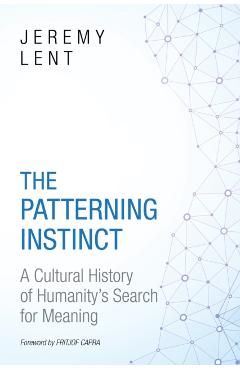
Patterning Instinct
Cod EAN 9781633882935
Preț
154,75 lei
171,95 lei
−10%
Fără reducere reală
Cel mai mic preț din cele 9 zile dinainte de 22 octombrie 2026 a fost 137,56 lei, mai mic decât acum. Reducerea de −10% e calculată față de prețul vechi afișat de magazin (171,95 lei).
Peste prețul mediu din ultimele 23 de zile
Media: 153 lei. Cel mai mic preț a fost 137,56 lei, ultima dată pe 21 octombrie 2026; acum e cu 12% mai mult. Vezi istoricul
la Libris
- Transport gratuit peste 135 lei
- Cupon de 10% la abonarea la newsletter
- Retur extins la 30 de zile
În stoc la Libris Prețuri actualizate la 22 octombrie 2026, 16:11
Oferta disponibilă
Prețurile și disponibilitatea sunt preluate automat de la magazine și se pot schimba. Când cumperi printr-un link de pe site, putem primi un comision de la magazin, fără niciun cost în plus pentru tine. Cum funcționează
-
 Patterning Instinct
În stoc
154,75 lei
Cel mai mic preț înainte
171,95 lei
Istoricul prețului
| Perioada | Cel mai mic | Cel mai mare | Prețul mediu | Scăderi |
|---|---|---|---|---|
| De când îl urmărim (23 de zile) | 137,56 lei | 154,75 lei | 153 lei | 1 |
Vezi schimbările de preț
| Din data | Cel mai mic preț |
|---|---|
| 22 octombrie 2026 | 154,75 lei |
| 20 octombrie 2026 | 137,56 lei |
| 13 octombrie 2026 | 154,75 lei |
Descriere
Winner of the 2017 Nautilus Silver Award! This fresh perspective on crucial questions of history identifies the root metaphors that cultures have used to construct meaning in their world. It offers a glimpse into the minds of a vast range of different peoples: early hunter-gatherers and farmers, ancient Egyptians, traditional Chinese sages, the founders of Christianity, trail-blazers of the Scientific Revolution, and those who constructed our modern consumer society. Taking the reader on an archaeological exploration of the mind, the author, an entrepreneur and sustainability leader, uses recent findings in cognitive science and systems theory to reveal the hidden layers of values that form today's cultural norms. Uprooting the tired clichés of the science-religion debate, he shows how medieval Christian rationalism acted as an incubator for scientific thought, which in turn shaped our modern vision of the conquest of nature. The author probes our current crisis of unsustainability and argues that it is not an inevitable result of human nature, but is culturally driven: a product of particular mental patterns that could conceivably be reshaped. By shining a light on our possible futures, the book foresees a coming struggle between two contrasting views of humanity: one driving to a technological endgame of artificially enhanced humans, the other enabling a sustainable future arising from our intrinsic connectedness with each other and the natural world. This struggle, it concludes, is one in which each of us will play a role through the meaning we choose to forge from the lives we lead. \n
Descrierea este preluată de la magazin.