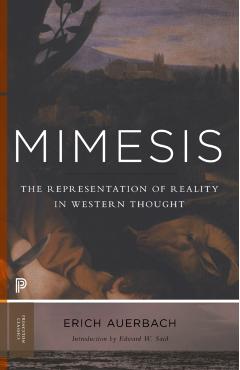
Mimesis
Cod EAN 9780691160221
Preț
161,57 lei
179,52 lei
−10%
Cel mai mic preț în ultimele 30 de zile: 143,62 lei
la Libris
- Transport gratuit peste 135 lei
- Cupon de 10% la abonarea la newsletter
- Retur extins la 30 de zile
În stoc la Libris Prețuri actualizate la 22 octombrie 2026, 16:05
Oferta disponibilă
Prețurile și disponibilitatea sunt preluate automat de la magazine și se pot schimba. Când cumperi printr-un link de pe site, putem primi un comision de la magazin, fără niciun cost în plus pentru tine. Cum funcționează
-
 Mimesis
În stoc
161,57 lei
Cel mai mic preț înainte
179,52 lei
Istoricul prețului
Vezi schimbările de preț
| Din data | Cel mai mic preț |
|---|---|
| 22 octombrie 2026 | 161,57 lei |
| 20 octombrie 2026 | 143,62 lei |
| 13 octombrie 2026 | 161,57 lei |
Descriere
More than half a century after its translation into English, Erich Auerbach's Mimesis remains a masterpiece of literary criticism. A brilliant display of erudition, wit, and wisdom, his exploration of how great European writers from Homer to Virginia Woolf depicted reality has taught generations how to read Western literature. This new expanded edition includes a substantial essay in introduction by Edward Said as well as an essay, never before translated into English, in which Auerbach responds to his critics. A German Jew, Auerbach was forced out of his professorship at the University of Marburg in 1935. He left for Turkey, where he taught at the state university in Istanbul. There he wrote Mimesis, publishing it in German after the end of the war. Displaced as he was, Auerbach produced a work of great erudition that contains no footnotes, basing his arguments instead on searching, illuminating readings of key passages from his primary texts. His aim was to show how from antiquity to the twentieth century literature progressed toward ever more naturalistic and democratic forms of representation. \n This essentially optimistic view of European history now appears as a defensive--and impassioned--response to the inhumanity he saw in the Third Reich. Ranging over works in Greek, Latin, Spanish, French, Italian, German, and English, Auerbach used his remarkable skills in philology and comparative literature to refute any narrow form of nationalism or chauvinism, in his own day and ours. For many readers, both inside and outside the academy, Mimesis is among the finest works of literary criticism ever written. This Princeton Classics edition includes a substantial introduction by Edward Said as well as an essay in which Auerbach responds to his critics. \n
Descrierea este preluată de la magazin.