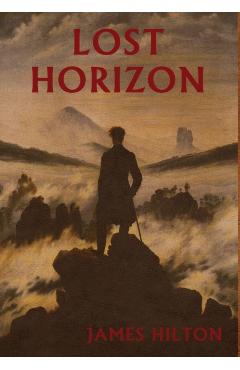
Lost Horizon - James Hilton
Cod EAN 9781604449327
Preț
193,93 lei
215,48 lei
−10%
Fără reducere reală
Cel mai mic preț din cele 9 zile dinainte de 22 octombrie 2026 a fost 172,38 lei, mai mic decât acum. Reducerea de −10% e calculată față de prețul vechi afișat de magazin (215,48 lei).
Peste prețul mediu din ultimele 29 de zile
Media: 192 lei. Cel mai mic preț a fost 172,38 lei, ultima dată pe 21 octombrie 2026; acum e cu 13% mai mult. Vezi istoricul
la Libris
- Transport gratuit peste 135 lei
- Cupon de 10% la abonarea la newsletter
- Retur extins la 30 de zile
În stoc la Libris Prețuri actualizate la 22 octombrie 2026, 16:15
Oferta disponibilă
Prețurile și disponibilitatea sunt preluate automat de la magazine și se pot schimba. Când cumperi printr-un link de pe site, putem primi un comision de la magazin, fără niciun cost în plus pentru tine. Cum funcționează
-
 Lost Horizon - James Hilton
În stoc
193,93 lei
Cel mai mic preț înainte
215,48 lei
Istoricul prețului
| Perioada | Cel mai mic | Cel mai mare | Prețul mediu | Scăderi |
|---|---|---|---|---|
| De când îl urmărim (29 de zile) | 172,38 lei | 193,93 lei | 192 lei | 1 |
Vezi schimbările de preț
| Din data | Cel mai mic preț |
|---|---|
| 22 octombrie 2026 | 193,93 lei |
| 20 octombrie 2026 | 172,38 lei |
| 13 octombrie 2026 | 193,93 lei |
Descriere
\n \nLost Horizon is a 1933 novel by English writer James Hilton. It is best remembered as the origin of Shangri-La, a fictional utopian lamasery high in the mountains of Tibet.\n \nHugh Conway, a veteran member of the British diplomatic service, finds inner peace, love, and a sense of purpose in Shangri-La, whose inhabitants enjoy unheard-of longevity. Among the book's themes is an allusion to the possibility of another cataclysmic world war brewing, as indeed it was at the time. It is said to have been inspired at least in part by accounts of travels in Tibetan borderlands, published in the National Geographic by the explorer and botanist Joseph Rock. The remote communities he visited, such as Muli, show many similarities to the fictional Shangri-La. One such town, Zhongdian, has now officially renamed itself as Shangri La (Chinese: Xianggelila) because of its claim to be the inspiration for the novel.\n \nThe book explicitly notes that having made war on the ground man would now fill the skies with death, and that all precious things were in danger of being lost, like the lost histories of Rome (Lost books of Livy). It was hoped that overlooked by the violent, Shangri-la would preserve them and reveal them later to a receptive world exhausted by war. That was the real purpose of the Lamasary; study, inner peace and long life were a side benefit to living there.\n \nConway is a veteran of the trench warfare of WWI, with the emotional state frequently cited after that war--a sense of emotional exhaustion or accelerated emotional aging. This harmonizes with the existing residents of the lamasary and he is strongly attracted to life at Shangri-La.\n
Descrierea este preluată de la magazin.