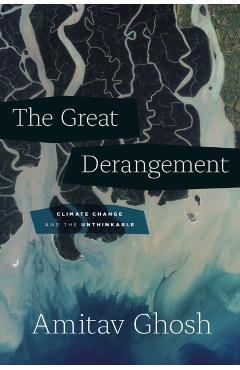
Great Derangement
Cod EAN 9780226526812
Preț
121,50 lei
135 lei
−10%
Fără reducere reală
Cel mai mic preț din cele 9 zile dinainte de 22 octombrie 2026 a fost 100,44 lei, mai mic decât acum. Reducerea de −10% e calculată față de prețul vechi afișat de magazin (135 lei).
Peste prețul mediu din ultimele 25 de zile
Media: 116 lei. Cel mai mic preț a fost 100,44 lei, ultima dată pe 17 octombrie 2026; acum e cu 21% mai mult. Vezi istoricul
la Libris
- Transport gratuit peste 135 lei
- Cupon de 10% la abonarea la newsletter
- Retur extins la 30 de zile
În stoc la Libris Prețuri actualizate la 22 octombrie 2026, 16:05
Oferta disponibilă
Prețurile și disponibilitatea sunt preluate automat de la magazine și se pot schimba. Când cumperi printr-un link de pe site, putem primi un comision de la magazin, fără niciun cost în plus pentru tine. Cum funcționează
-
 Great Derangement
În stoc
121,50 lei
Cel mai mic preț înainte
135 lei
Istoricul prețului
| Perioada | Cel mai mic | Cel mai mare | Prețul mediu | Scăderi |
|---|---|---|---|---|
| De când îl urmărim (25 de zile) | 100,44 lei | 121,50 lei | 116 lei | 1 |
Vezi schimbările de preț
| Din data | Cel mai mic preț |
|---|---|
| 22 octombrie 2026 | 121,50 lei |
| 20 octombrie 2026 | 108 lei |
| 18 octombrie 2026 | 121,50 lei |
| 13 octombrie 2026 | 100,44 lei |
Descriere
\nAre we deranged? The acclaimed Indian novelist Amitav Ghosh argues that future generations may well think so. How else to explain our imaginative failure in the face of global warming? In his first major book of nonfiction since In an Antique Land, Ghosh examines our inability--at the level of literature, history, and politics--to grasp the scale and violence of climate change. \n The extreme nature of today's climate events, Ghosh asserts, make them peculiarly resistant to contemporary modes of thinking and imagining. This is particularly true of serious literary fiction: hundred-year storms and freakish tornadoes simply feel too improbable for the novel; they are automatically consigned to other genres. In the writing of history, too, the climate crisis has sometimes led to gross simplifications; Ghosh shows that the history of the carbon economy is a tangled global story with many contradictory and counterintuitive elements. \n \n Ghosh ends by suggesting that politics, much like literature, has become a matter of personal moral reckoning rather than an arena of collective action. But to limit fiction and politics to individual moral adventure comes at a great cost. The climate crisis asks us to imagine other forms of human existence--a task to which fiction, Ghosh argues, is the best suited of all cultural forms. His book serves as a great writer's summons to confront the most urgent task of our time. \n\n
Descrierea este preluată de la magazin.