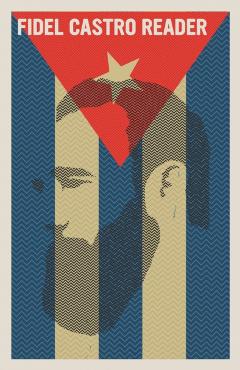
Fidel Castro Reader - Fidel Castro
Cod EAN 9781644213926
Preț
129,54 lei
143,93 lei
−10%
Fără reducere reală
Cel mai mic preț din cele 9 zile dinainte de 22 octombrie 2026 a fost 115,14 lei, mai mic decât acum. Reducerea de −10% e calculată față de prețul vechi afișat de magazin (143,93 lei).
Peste prețul mediu din ultimele 25 de zile
Media: 128 lei. Cel mai mic preț a fost 115,14 lei, ultima dată pe 21 octombrie 2026; acum e cu 13% mai mult. Vezi istoricul
la Libris
- Transport gratuit peste 135 lei
- Cupon de 10% la abonarea la newsletter
- Retur extins la 30 de zile
În stoc la Libris Prețuri actualizate la 22 octombrie 2026, 16:11
Oferta disponibilă
Prețurile și disponibilitatea sunt preluate automat de la magazine și se pot schimba. Când cumperi printr-un link de pe site, putem primi un comision de la magazin, fără niciun cost în plus pentru tine. Cum funcționează
-
 Fidel Castro Reader - Fidel Castro
În stoc
129,54 lei
Cel mai mic preț înainte
143,93 lei
Istoricul prețului
| Perioada | Cel mai mic | Cel mai mare | Prețul mediu | Scăderi |
|---|---|---|---|---|
| De când îl urmărim (25 de zile) | 115,14 lei | 129,54 lei | 128 lei | 1 |
Vezi schimbările de preț
| Din data | Cel mai mic preț |
|---|---|
| 22 octombrie 2026 | 129,54 lei |
| 20 octombrie 2026 | 115,14 lei |
| 13 octombrie 2026 | 129,54 lei |
Descriere
Fidel Castro Ruz was born in Birán, in the former province of Oriente, on August 13, 1926. Born into a well-off landowning family, he received his primary education in a rural school, later attended private Jesuit schools in Santiago de Cuba and Havana, and graduated from law school at the University of Havana. While at university, he joined a student group against political corruption. He was a member of the Cuban People's Party (also known as the Orthodox Party) in 1947 and became a leader of its left wing. That same year, he volunteered for an armed expedition against the Trujillo dictatorship in the Dominican Republic (the expeditionaries were unable to leave Cuba to \ncarry out their plans). As a student leader, Fidel Castro was in Colombia to help organize a Latin American anti-imperialist student congress and participated in the April 1948 popular uprising in Bogotá. After Fulgencio Batista's coup d'état of March 10, 1952, Fidel Castro began to organize a revolutionary organization to initiate armed insurrection against the US-backed Batista dictatorship. He organized and led an unsuccessful attack on the Moncada army garrison in Santiago de Cuba on July 26, 1953, for which he and over two dozen others were captured, tried, found guilty, and imprisoned; more than 60 revolutionaries were murdered by Batista's army during and immediately after the Moncada attack. While in prison, Fidel Castro edited his defense speech from the trial into the pamphlet History Will Absolve Me, which was distributed in tens of thousands of copies and became the program of what was to become the July 26 Movement. Originally sentenced to 15 years, he and his comrades were released from prison 22 months later, in May 1955, as a result of a growing public campaign. On July 7, 1955, Fidel Castro left for Mexico, where he began to organize a guerrilla expedition to Cuba to launch the armed insurrection. On December 2, 1956, along with 81 other fighters, including his brother Raúl, Che Guevara, Camilo Cienfuegos, Juan Almeida and Jesús Montané, Fidel reached the Cuban coast aboard the cabin cruiser Granma. For the next two \nyears, Fidel Castro directed the operations of the Rebel Army, in addition to continuing as central leader of the July 26 Movement. After an initial setback, the guerrillas were able to reorganize their forces and by late 1958 had successfully extended the struggle from the Sierra Maestra mountains to the heart of the island. On January 1, 1959, Batista fled Cuba. In response to a call by Fidel, hundreds of thousands of Cubans launched an insurrectionary general strike that ensured the victory of the revolution. Fidel Castro arrived triumphantly in Havana on January 8 as commander-in-chief of Cuba's victorious Rebel Army. On February 13, 1959, he was named prime minister, a position he held until December 1976, when he became president of the Council of State and the Council of Ministers. He was the first secretary of the Central Committee of the Cuban Communist Party from its founding in 1965 until 2011. On July 31, 2006, shortly before his 80th birthday, Fidel Castro handed over all his positions in the Cuban government and Communist Party to his brother Raúl, minister of defense and first vice-president of the Council of State. Fidel Castro died on November 25, 2016.
Descrierea este preluată de la magazin.