Sari la conținut

Vincenzo Venezia

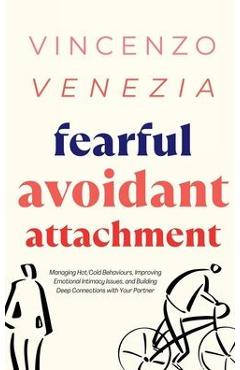
Fearful Avoidant Attachment: Managing Hot/Cold Behaviours, Improving Emotional Intimacy Issues, and Building Deep Connections with Your Partner - Vincenzo Venezia

Cod EAN 9791281498150

Preț

111,55 lei

123,94 lei −10%

Fără reducere reală

Cel mai mic preț din cele 9 zile dinainte de 22 octombrie 2026 a fost 99,15 lei, mai mic decât acum. Reducerea de −10% e calculată față de prețul vechi afișat de magazin (123,94 lei).

Peste prețul mediu din ultimele 29 de zile

Media: 111 lei. Cel mai mic preț a fost 99,15 lei, ultima dată pe 21 octombrie 2026; acum e cu 13% mai mult. Vezi istoricul

la Libris

  • Transport gratuit peste 135 lei
  • Cupon de 10% la abonarea la newsletter
  • Retur extins la 30 de zile

În stoc la Libris Prețuri actualizate la 22 octombrie 2026, 16:11

Oferta disponibilă

Prețurile și disponibilitatea sunt preluate automat de la magazine și se pot schimba. Când cumperi printr-un link de pe site, putem primi un comision de la magazin, fără niciun cost în plus pentru tine. Cum funcționează

  1. Fearful Avoidant Attachment: Managing Hot/Cold Behaviours, Improving Emotional Intimacy Issues, and Building Deep Connections with Your Partner - Vincenzo Venezia În stoc
    111,55 lei

    Cel mai mic preț înainte 123,94 lei

Istoricul prețului

Acum 111,55 lei. Cel mai mic preț din ultimele 30 de zile: 99,15 lei (20 octombrie 2026). În ultimele 29 de zile prețul minim a variat între 99,15 lei și 111,55 lei.
Prețul pe perioade
PerioadaCel mai micCel mai marePrețul mediuScăderi
De când îl urmărim (29 de zile) 99,15 lei 111,55 lei 111 lei 1
Vezi schimbările de preț
Din dataCel mai mic preț
22 octombrie 2026111,55 lei
20 octombrie 202699,15 lei
13 octombrie 2026111,55 lei

Descriere

Do you find it difficult to maintain a successful relationship and enter into intimacy? Despite your best efforts to advance your romantic relationship, does it not move forward? Do you feel the fear that you will be hurt and disappointed in some way and it will all end in heartbreak? Whether we are aware of it or not, our childhood experiences play a huge role in shaping the kind of person we become. The relationships we had as children with our parents, or whoever cared for us, have a profound effect on how we react to certain situations in our lives and how we interact with the people around us. Fearful-avoidant attachment is a pattern of behaviour in relationships that is characterised by both high anxiety and high avoidance, in which a person longs for connection but also fears getting too close to someone. \n They expect rejection, disappointment and pain in their relationship. They have difficulty believing that their partner will love and support them as they are. \n I recommend reading this manual if you have experienced in your romantic relationship and in your relationship with yourself: - Fear of intimacy or fear of relationships in general. - Avoidance of commitment in relationships. - High anxiety. - A negative view of yourself; feeling that you do not deserve healthy relationships. - Severe difficulty regulating emotions in relationships. - Reacting poorly or inappropriately to negative emotions. - Negative perception of other people and their support. - A tendency to be violent in relationships. - A large number of sexual partners. - Feeling generally dissatisfied with relationships. \n Avoidant fearful people exhibit a kind of reluctance to engage in an intimate relationship and an extreme need to be loved. \n Avoidant fearful people often end up in very complicated relationships with high levels of conflict. They find themselves in these dynamics not because they desire them, but because they are afraid to approach and fully connect due to a lack of trust. \n All this results in the creation of a self-fulfilling prophecy. \n This can lead to an endless cycle of approach and avoidance with potential partners. This mindset can turn into a form of self-sabotage, causing the fearful avoidant to prematurely end a relationship that instead deserved to be deepened and experienced with joy. \n Can the fearful avoidant style be changed? Fortunately, there are methods in this manual to identify and interrupt dysfunctional patterns and

Descrierea este preluată de la magazin.

Produse similare

Vezi toate