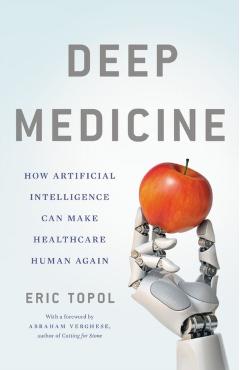
A visit to a physician these days is cold: physicians spend most of their time typing at computers, making minimal eye contact. Appointments generally last only a few minutes, with scarce time for the doctor to connect to a patient's story, or explain how and why different procedures and treatments might be undertaken. As a result, errors abound: indeed, misdiagnosis is the fourth-leading cause of death in the United States, trailing only heart disease, cancer, and stroke. This is because, despite having access to more resources than ever, doctors are vulnerable not just to the economic demand to see more patients, but to distraction, burnout, data overload, and their own intrinsic biases. Physicians are simply overmatched. \n \n As Eric Topol argues in Deep Medicine, artificial intelligence can help. Natural-language processing could automatically record notes from our doctor visits; virtual psychiatrists could better predict the risk of suicide or other mental health issues for vulnerable patients; deep-learning software will make every physician a master diagnostician; and we could even use smartphone apps to take our own medical selfies for skin exams and receive immediate analysis. . On top of that, the virtual smartphone assistants of today--Alexa, Siri, Cortana--could analyze our daily health data to reduce the need for doctor visits and trips to the emergency room, and support for people suffering from asthma, epilepsy, and heart disease. By integrating tools like these into their daily medical practice, doctors would be able to spend less time collecting and cataloging information, and more time providing thorough, intimate, and meaningful care for their patients, as no machine can. \n \n Artificial intelligence can also help remedy the debilitating cost of healthcare, both for individuals and the economy writ large. The medical sector now absorbs 20 percent of the US gross domestic product--it is largest sector by dollars and jobs. And it's very inefficient. Take the cost of medical scans: There are over 20 million medical scans performed in the US every day, and an MRI, for example, costs hundreds to thousands of dollars. AI could process 260 million medical scans (more than 2 weeks' worth) in less than 24 hours for a cost of only $1000. We pay billions and billions of dollars for the same work today. \n \n