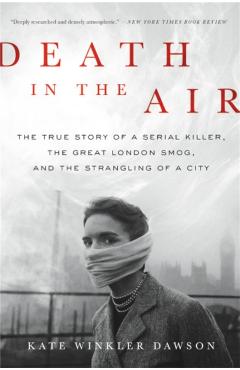
London in 1952 was a still recovering from the devastation wrought by World War II: rationing was still in effect, rates of crime and unemployment were high, and the national economy was in shambles. In an effort to repay its massive war debt, the British government was selling its clean-burning coal to America, and Londoners were forced to make do with the cheap brown coal. \n \n That winter, as the weather turned bitter, buses, trucks and automobiles, and thousands of coal-burning hearths belched particulate matter into the air. But the smog that descended on December 5th of 1952 was different; it was a sulfurous type of smog that held the city hostage for five long days. Mass transit ground to a halt, criminals roamed the streets, and some 12,000 people, many of them elderly or ill, died. What would later be called the Great Smog of 1952 remains one of the greatest environmental disasters of all time. \n \n That same December, there was another killer at large in London. John Reginald Christie murdered at least seven women in his flat in Notting Hill--luring women to his home with the promise of a home remedy for bronchitis, instructing his victims to inhale carbon-monoxide laden coal gas until they passed out. He then raped and strangled them, burying two in the garden, stashing several more in a papered-over kitchen alcove, and his wife of 34 years beneath the floorboards of their parlor. The arrest of the Beast of Rillington Place caused a media frenzy; moreover, Christie's role in sending an innocent man to the gallows was the impetus for the abolition of the death penalty in the UK. \n \n The smog, meanwhile, was slow to be implicated. Indeed, the British government did their level best to disavow any connection between the death rate and the air quality, blaming the sudden spike in deaths on fictitious flu epidemic. Eventually, however, the media and one crusading Member of Parliament launched a fight that would be the beginning of the global clean air movement. The Clean Air Act of 1956 was a direct result of the Great Smog, and that legislation provided a model for the rest of the world, including the U.S. \n \n In a braided narrative that draws on extensive interviews, never-before published material and archival research, Kate Winkler Dawson captivatingly