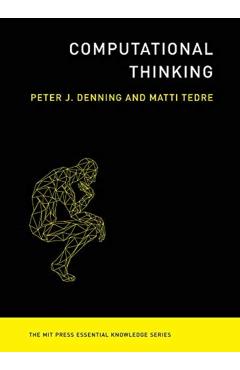
Computational Thinking
Cod EAN 9780262536561
Preț
110,10 lei
122,33 lei
−10%
Fără reducere reală
Cel mai mic preț din cele 9 zile dinainte de 22 octombrie 2026 a fost 97,86 lei, mai mic decât acum. Reducerea de −10% e calculată față de prețul vechi afișat de magazin (122,33 lei).
Peste prețul mediu din ultimele 23 de zile
Media: 109 lei. Cel mai mic preț a fost 97,86 lei, ultima dată pe 21 octombrie 2026; acum e cu 13% mai mult. Vezi istoricul
la Libris
- Transport gratuit peste 135 lei
- Cupon de 10% la abonarea la newsletter
- Retur extins la 30 de zile
În stoc la Libris Prețuri actualizate la 22 octombrie 2026, 16:11
Oferta disponibilă
Prețurile și disponibilitatea sunt preluate automat de la magazine și se pot schimba. Când cumperi printr-un link de pe site, putem primi un comision de la magazin, fără niciun cost în plus pentru tine. Cum funcționează
-
 Computational Thinking
În stoc
110,10 lei
Cel mai mic preț înainte
122,33 lei
Istoricul prețului
| Perioada | Cel mai mic | Cel mai mare | Prețul mediu | Scăderi |
|---|---|---|---|---|
| De când îl urmărim (23 de zile) | 97,86 lei | 110,10 lei | 109 lei | 1 |
Vezi schimbările de preț
| Din data | Cel mai mic preț |
|---|---|
| 22 octombrie 2026 | 110,10 lei |
| 20 octombrie 2026 | 97,86 lei |
| 13 octombrie 2026 | 110,10 lei |
Descriere
An introduction to computational thinking that traces a genealogy beginning centuries before the digital computer. \n \n A few decades into the digital era, scientists discovered that thinking in terms of computation made possible an entirely new way of organizing scientific investigation; eventually, every field had a computational branch: computational physics, computational biology, computational sociology. More recently, computational thinking has become part of the K-12 curriculum. But what is computational thinking? This volume in the MIT Press Essential Knowledge series offers an accessible overview, tracing a genealogy that begins centuries before digital computers and portraying computational thinking as pioneers of computing have described it. \n \n The authors explain that computational thinking (CT) is not a set of concepts for programming; it is a way of thinking that is honed through practice: the mental skills for designing computations to do jobs for us, and for explaining and interpreting the world as a complex of information processes. Mathematically trained experts (known as computers) who performed complex calculations as teams engaged in CT long before electronic computers. The authors identify six dimensions of today's highly developed CT-methods, machines, computing education, software engineering, computational science, and design-and cover each in a chapter. Along the way, they debunk inflated claims for CT and computation while making clear the power of CT in all its complexity and multiplicity. \n
Descrierea este preluată de la magazin.