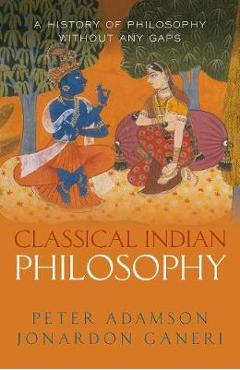
Classical Indian Philosophy - Peter Adamson
Cod EAN 9780198851769
Preț
260,33 lei
289,26 lei
−10%
Fără reducere reală
Cel mai mic preț din cele 12 zile dinainte de 25 octombrie 2026 a fost 231,41 lei, mai mic decât acum. Reducerea de −10% e calculată față de prețul vechi afișat de magazin (289,26 lei).
Peste prețul mediu din ultimele 25 de zile
Media: 255 lei. Cel mai mic preț a fost 231,41 lei, ultima dată pe 24 octombrie 2026; acum e cu 12% mai mult. Vezi istoricul
la Libris
- Transport gratuit peste 135 lei
- Cupon de 10% la abonarea la newsletter
- Retur extins la 30 de zile
În stoc la Libris Prețuri actualizate la 2 noiembrie 2026, 21:07
Oferta disponibilă
Prețurile și disponibilitatea sunt preluate automat de la magazine și se pot schimba. Când cumperi printr-un link de pe site, putem primi un comision de la magazin, fără niciun cost în plus pentru tine. Cum funcționează
-
 Classical Indian Philosophy - Peter Adamson
În stoc
260,33 lei
Cel mai mic preț înainte
289,26 lei
Istoricul prețului
| Perioada | Cel mai mic | Cel mai mare | Prețul mediu | Scăderi |
|---|---|---|---|---|
| De când îl urmărim (25 de zile) | 231,41 lei | 260,33 lei | 255 lei | 1 |
Vezi schimbările de preț
| Din data | Cel mai mic preț |
|---|---|
| 25 octombrie 2026 | 260,33 lei |
| 20 octombrie 2026 | 231,41 lei |
| 13 octombrie 2026 | 260,33 lei |
Descriere
\nPeter Adamson and Jonardon Ganeri present a lively introduction to one of the world's richest intellectual traditions: the philosophy of classical India. They begin with the earliest extant literature, the Vedas, and the explanatory works that these inspired, known as Upaniṣads. They also discuss other famous texts of classical Vedic culture, especially the Mahābhārata and its most notable section, the Bhagavad-Gīta, alongside the rise of Buddhism and Jainism. In this opening section, Adamson and Ganeri emphasize the way that philosophy was practiced as a form of life in search of liberation from suffering. \nNext, the pair move on to the explosion of philosophical speculation devoted to foundational texts called 'sutras, ' discussing such traditions as the logical and epistemological Nyd=aya school, the monism of Advaita Vedānta, and the spiritual discipline of Yoga. \n \nIn the final section of the book, they chart further developments within Buddhism, highlighting Nagārjuna's radical critique of 'non-dependent' concepts and the no-self philosophy of mind found in authors like Dignāga, and within Jainism, focusing especially on its 'standpoint' epistemology. Unlike other introductions that cover the main schools and positions in classical Indian philosophy, Adamson and Ganeri's lively guide also pays attention to philosophical themes such as non-violence, political authority, and the status of women, while considering textual traditions typically left out of overviews of Indian thought, like the Cārvāka school, Tantra, and aesthetic theory as well. \n \nAdamson and Ganeri conclude by focusing on the much-debated question of whether Indian philosophy may have influenced ancient Greek philosophy and, from there, evaluate the impact that this area of philosophy had on later Western thought. \n\n
Descrierea este preluată de la magazin.