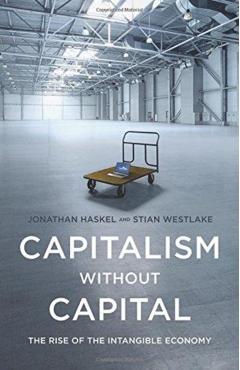
Capitalism without Capital
Cod EAN 9780691183299
Preț
117,43 lei
130,48 lei
−10%
Fără reducere reală
Cel mai mic preț din cele 9 zile dinainte de 22 octombrie 2026 a fost 104,38 lei, mai mic decât acum. Reducerea de −10% e calculată față de prețul vechi afișat de magazin (130,48 lei).
Peste prețul mediu din ultimele 25 de zile
Media: 116 lei. Cel mai mic preț a fost 104,38 lei, ultima dată pe 21 octombrie 2026; acum e cu 13% mai mult. Vezi istoricul
la Libris
- Transport gratuit peste 135 lei
- Cupon de 10% la abonarea la newsletter
- Retur extins la 30 de zile
În stoc la Libris Prețuri actualizate la 22 octombrie 2026, 16:15
Oferta disponibilă
Prețurile și disponibilitatea sunt preluate automat de la magazine și se pot schimba. Când cumperi printr-un link de pe site, putem primi un comision de la magazin, fără niciun cost în plus pentru tine. Cum funcționează
-
 Capitalism without Capital
În stoc
117,43 lei
Cel mai mic preț înainte
130,48 lei
Istoricul prețului
| Perioada | Cel mai mic | Cel mai mare | Prețul mediu | Scăderi |
|---|---|---|---|---|
| De când îl urmărim (25 de zile) | 104,38 lei | 117,43 lei | 116 lei | 1 |
Vezi schimbările de preț
| Din data | Cel mai mic preț |
|---|---|
| 22 octombrie 2026 | 117,43 lei |
| 20 octombrie 2026 | 104,38 lei |
| 13 octombrie 2026 | 117,43 lei |
Descriere
\nEarly in the twenty-first century, a quiet revolution occurred. For the first time, the major developed economies began to invest more in intangible assets, like design, branding, and software, than in tangible assets, like machinery, buildings, and computers. For all sorts of businesses, the ability to deploy assets that one can neither see nor touch is increasingly the main source of long-term success. But this is not just a familiar story of the so-called new economy. Capitalism without Capital shows that the growing importance of intangible assets has also played a role in some of the larger economic changes of the past decade, including the growth in economic inequality and the stagnation of productivity. Jonathan Haskel and Stian Westlake explore the unusual economic characteristics of intangible investment and discuss how an economy rich in intangibles is fundamentally different from one based on tangibles. Capitalism without Capital concludes by outlining how managers, investors, and policymakers can exploit the characteristics of an intangible age to grow their businesses, portfolios, and economies.
Descrierea este preluată de la magazin.


