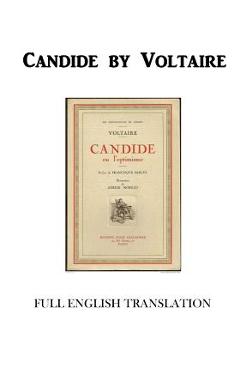
Candide by Voltaire - William F. Fleming
Cod EAN 9781522968566
Preț
83,35 lei
92,61 lei
−10%
Fără reducere reală
Cel mai mic preț din cele 8 zile dinainte de 22 octombrie 2026 a fost 74,09 lei, mai mic decât acum. Reducerea de −10% e calculată față de prețul vechi afișat de magazin (92,61 lei).
Peste prețul mediu din ultimele 27 de zile
Media: 82,66 lei. Cel mai mic preț a fost 74,09 lei, ultima dată pe 21 octombrie 2026; acum e cu 12% mai mult. Vezi istoricul
la Libris
- Transport gratuit peste 135 lei
- Cupon de 10% la abonarea la newsletter
- Retur extins la 30 de zile
În stoc la Libris Prețuri actualizate la 22 octombrie 2026, 16:17
Oferta disponibilă
Prețurile și disponibilitatea sunt preluate automat de la magazine și se pot schimba. Când cumperi printr-un link de pe site, putem primi un comision de la magazin, fără niciun cost în plus pentru tine. Cum funcționează
-
 Candide by Voltaire - William F. Fleming
În stoc
83,35 lei
Cel mai mic preț înainte
92,61 lei
Istoricul prețului
| Perioada | Cel mai mic | Cel mai mare | Prețul mediu | Scăderi |
|---|---|---|---|---|
| De când îl urmărim (27 de zile) | 74,09 lei | 83,35 lei | 82,66 lei | 1 |
Vezi schimbările de preț
| Din data | Cel mai mic preț |
|---|---|
| 22 octombrie 2026 | 83,35 lei |
| 20 octombrie 2026 | 74,09 lei |
| 14 octombrie 2026 | 83,35 lei |
Descriere
\nCandide by VoltaireBy VoltaireFULL ENGLISH TRANSLATIONIntroduction by Philip LittellWilliam F. FlemingCandide, ou l'Optimisme is a French satire first published in 1759 by Voltaire, a philosopher of the Age of Enlightenment. The novella has been widely translated, with English versions titled Candide: or, All for the Best (1759); Candide: or, The Optimist (1762); and Candide: or, Optimism (1947). It begins with a young man, Candide, who is living a sheltered life in an Edenic paradise and being indoctrinated with Leibnizian optimism (or simply optimism) by his mentor, Professor Pangloss. The work describes the abrupt cessation of this lifestyle, followed by Candide's slow, painful disillusionment as he witnesses and experiences great hardships in the world. Voltaire concludes with Candide, if not rejecting optimism outright, advocating a deeply practical precept, we must cultivate our garden, in lieu of the Leibnizian mantra of Pangloss, all is for the best in the best of all possible worlds.Ever since 1759, when Voltaire wrote Candide in ridicule of the notion that this is the best of all possible worlds, this world has been a gayer place for readers. Voltaire wrote it in three days, and five or six generations have found that its laughter does not grow old.Candide has not aged. Yet how different the book would have looked if Voltaire had written it a hundred and fifty years later than 1759. It would have been, among other things, a book of sights and sounds. A modern writer would have tried to catch and fix in words some of those Atlantic changes which broke the Atlantic monotony of that voyage from Cadiz to Buenos Ayres. When Martin and Candide were sailing the length of the Mediterranean we should have had a contrast between naked scarped Balearic cliffs and headlands of Calabria in their mists. We should have had quarter distances, far horizons, the altering silhouettes of an Ionian island. Colored birds would have filled Paraguay with their silver or acid cries.Dr. Pangloss, to prove the existence of design in the universe, says that noses were made to carry spectacles, and so we have spectacles. A modern satirist would not try to paint with Voltaire's quick brush the doctrine that he wanted to expose. And he would choose a more complicated doctrine than Dr. Pangloss's optimism, would study it more closely, feel his destructive way about it with a more learned and caressing malice. His attack, stealthier, more flexible and more patien
Descrierea este preluată de la magazin.