Ariel: The Restored Edition | Sylvia Plath
Preț
37 lei
Același preț în ultimele 34 de zile
Prețul nu s-a schimbat de când îl urmărim. Vezi istoricul
la Carturesti
- 15% reducere la prima comandă
- 2% în puncte de fidelitate
- Transport gratuit peste 150 lei
În stoc la Carturesti Prețuri actualizate la 8 octombrie 2026, 15:43
Oferta disponibilă
Prețurile și disponibilitatea sunt preluate automat de la magazine și se pot schimba. Când cumperi printr-un link de pe site, putem primi un comision de la magazin, fără niciun cost în plus pentru tine. Cum funcționează
-
 Ariel: The Restored Edition | Sylvia Plath
În stoc
37 lei
Cel mai mic preț
Istoricul prețului
Prețul minim a rămas 37 lei în ultimele 34 de zile.
Descriere
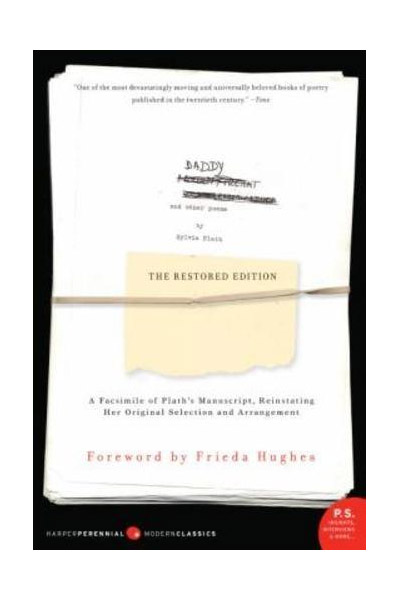
It is difficult to read Sylvia Plath, one of the finest poets of the 20th century, without the knowledge and half-knowledge of her life and death intruding and cementing meaning on to her work. This, her second collection, published posthumously in 1965, contains some of her most fabulously versatile and energetic verse despite her preoccupation with death which is often as theatrical as it is agonising. The volume begins as she wanted with "Morning Song", a colourful, rich poem to her baby: "Love set you going like a fat gold watch". In it, she sees herself as "cow-heavy and floral in my Victorian nightgown", contrasting beautifully with the child's mouth which "opens clean as a cat's". She need not mention milk. The "clear vowels" of the baby's cries "rise like balloons", re-emphasising the lightness and playful joy she could experience through motherhood. "Night Dances", about the "pure leaps and spirals" her son performed in bed before laying down, comfort her. "Surely they travel / The world forever, I shall not entirely / Sit emptied of beauties, the gift / Of your small breath, the drenched grass / Smell of your sleep, lilies, lilies." The risky, running images and associations are breathtaking, still. There is something redemptive in her love for her child which eases her anguish. "The blood blooms clean / In you, ruby. / The pain / you wake to is not yours ... You are the one / Solid the spaces lean on, envious." Her infamous poems "Lady Lazarus" and "Daddy" are also here. In both, the first person narrator is a persona, a fiction that overlaps with autobiography. Plath once explained that "Lady Lazarus" is "a woman who has the great and terrible gift of being reborn. The only trouble is, she has to die first." Deeply sardonic in tone, she has the levity of Dorothy Parker in moments. "Dying is an art, like everything else. / I do it exceptionally well." But there is resurgence after melt-down: "Out of the ash / I rise with my red hair / And I eat men like air." Anger with her father, characterised as a Nazi, Herr Enemy extends in "Daddy". "Daddy, I have had to kill you. / You died before I had time-- / Marble-heavy, a bag full of God." It remains a staggering and disturbing poem in which she imagines herself the daughter of a Nazi and a Jew. Plath would have preferred to end the collection with "Wintering", a less contorted poem about storing honey from her beehive. It ends hopefully: "The bees are flying. They taste the spring." Often puzzling or plainly obtuse, Plath's all the better for that. --Cherry Smyth --This text refers to an out of print or unavailable edition of this title.
Descrierea este preluată de la magazin.