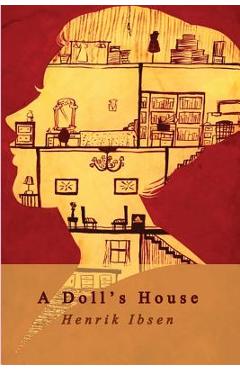
A Doll's House - Henrik Ibsen
Cod EAN 9781503213807
Preț
48,75 lei
54,17 lei
−10%
Fără reducere reală
Cel mai mic preț din cele 9 zile dinainte de 22 octombrie 2026 a fost 43,34 lei, mai mic decât acum. Reducerea de −10% e calculată față de prețul vechi afișat de magazin (54,17 lei).
Peste prețul mediu din ultimele 29 de zile
Media: 48,38 lei. Cel mai mic preț a fost 43,34 lei, ultima dată pe 21 octombrie 2026; acum e cu 12% mai mult. Vezi istoricul
la Libris
- Transport gratuit peste 135 lei
- Cupon de 10% la abonarea la newsletter
- Retur extins la 30 de zile
În stoc la Libris Prețuri actualizate la 22 octombrie 2026, 16:05
Oferta disponibilă
Prețurile și disponibilitatea sunt preluate automat de la magazine și se pot schimba. Când cumperi printr-un link de pe site, putem primi un comision de la magazin, fără niciun cost în plus pentru tine. Cum funcționează
-
 A Doll's House - Henrik Ibsen
În stoc
48,75 lei
Cel mai mic preț înainte
54,17 lei
Istoricul prețului
| Perioada | Cel mai mic | Cel mai mare | Prețul mediu | Scăderi |
|---|---|---|---|---|
| De când îl urmărim (29 de zile) | 43,34 lei | 48,75 lei | 48,38 lei | 1 |
Vezi schimbările de preț
| Din data | Cel mai mic preț |
|---|---|
| 22 octombrie 2026 | 48,75 lei |
| 20 octombrie 2026 | 43,34 lei |
| 13 octombrie 2026 | 48,75 lei |
Descriere
\nA Doll's House (Norwegian: Et dukkehjem; also translated as A Doll House) is a three-act play in prose by Henrik Ibsen. It premiered at the Royal Theatre in Copenhagen, Denmark, on 21 December 1879, having been published earlier that month. The play is significant for its critical attitude toward 19th century marriage norms. It aroused great controversy at the time, as it concludes with the protagonist, Nora, leaving her husband and children because she wants to discover herself. Ibsen was inspired by the belief that a woman cannot be herself in modern society, since it is an exclusively male society, with laws made by men and with prosecutors and judges who assess feminine conduct from a masculine standpoint. Its ideas can also be seen as having a wider application: Michael Meyer argued that the play's theme is not women's rights, but rather the need of every individual to find out the kind of person he or she really is and to strive to become that person. In a speech given to the Norwegian Association for Women's Rights in 1898, Ibsen insisted that he must disclaim the honor of having consciously worked for the women's rights movement, since he wrote without any conscious thought of making propaganda, his task having been the description of humanity.
Descrierea este preluată de la magazin.